

Introduction
Drywall has been one of the most widely used wall board materials for many years. It is affordable, easy to install, and suitable for many standard interior wall applications.
But modern construction is changing.
Today, contractors and buyers are paying more attention to moisture resistance, fire safety, long-term durability, renovation efficiency, and system performance. In many projects, a standard drywall board may no longer be enough.
This is why lightweight cement board is becoming a stronger alternative for modern wall systems.
The question is not simply: “Which board is better?”
The better question is:
Where is drywall suitable, and where should buyers consider upgrading to lightweight cement board?
As a professional manufacturer of lightweight cement board, DART believes material selection should be practical, honest, and based on real application needs.
Drywall Is Popular, But Not Always Enough
Drywall, also known as gypsum board or plasterboard, is widely used because it is:
- economical
- easy to cut
- fast to install
- suitable for standard dry interior walls
- familiar to most contractors
For many basic residential and commercial interiors, drywall is still a practical choice.
However, drywall also has limitations.
In areas exposed to moisture, impact, frequent use, or higher fire safety requirements, ordinary drywall may not offer enough long-term stability. Once moisture enters the board, it may soften, deform, lose strength, or create problems behind the finished surface.
This does not mean drywall is a poor material.
It means drywall should be used where it fits.
For more demanding wall systems, buyers need to look at stronger and more stable board options.
What Is Lightweight Cement Board?
Lightweight cement board is a cement-based building board designed to offer a better balance between performance and handling.
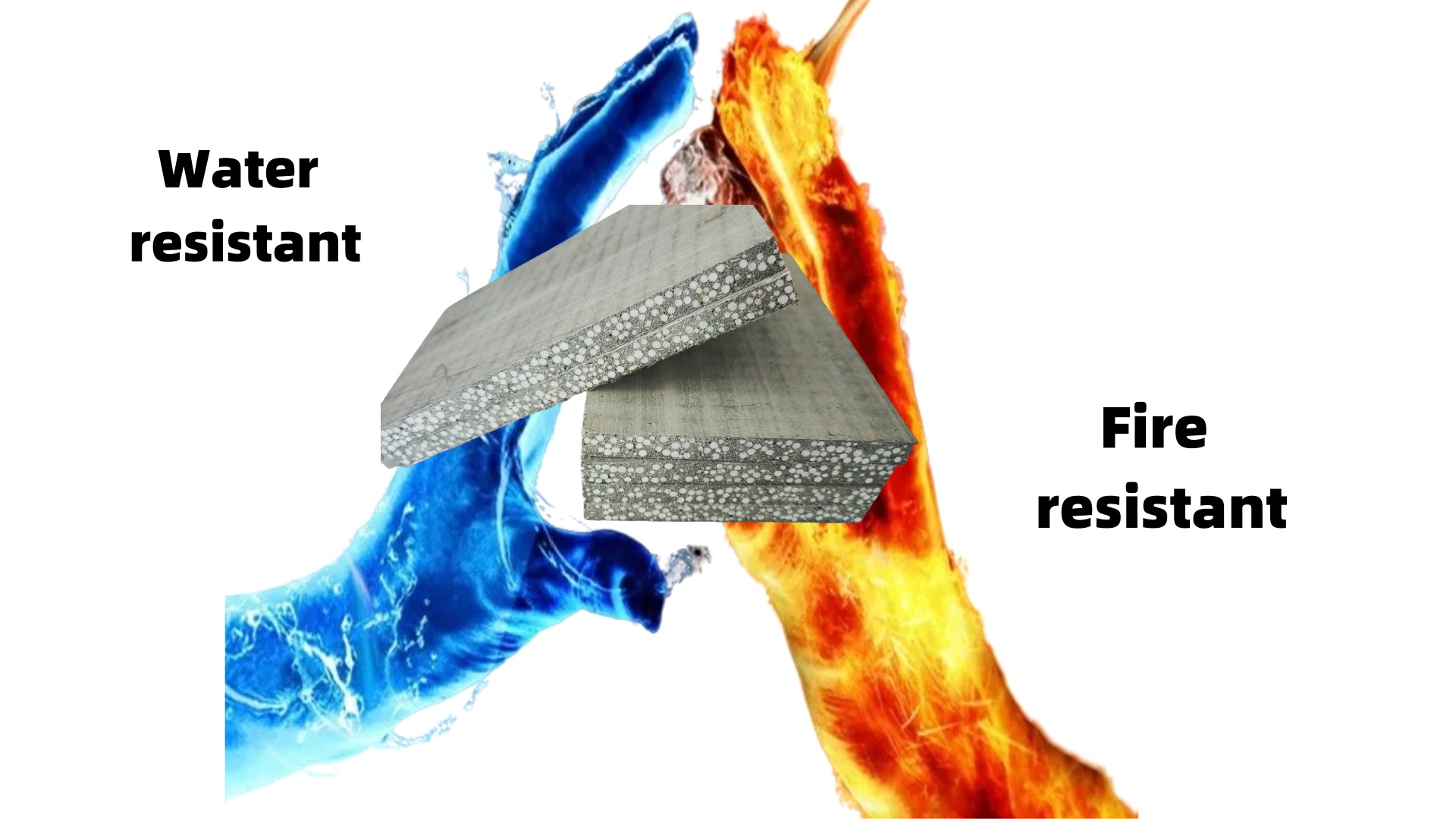
Compared with traditional heavy cement boards, a high-quality lightweight cement board provides lower weight while still maintaining important advantages such as fire resistance, moisture stability, and durability.
DartLite lightweight cement board is engineered with a controlled density range of 500–1000 kg/m³, allowing different specifications for different applications.
It can be used in:
- interior wall systems
- ceiling systems
- wet-area walls
- bathroom and shower substrates
- renovation projects
- modular and prefabricated panels
- exterior wall substrate systems
- commercial interiors
The purpose is not to replace drywall in every situation.
The purpose is to provide a stronger option where ordinary drywall may not be enough.
Moisture Resistance: One of the Biggest Differences
Moisture is one of the most important differences between drywall and cement-based boards.
Standard drywall is mainly designed for dry interior spaces. In humid or wet environments, it can absorb moisture and may lose stability over time. Even moisture-resistant gypsum boards have limits when used in areas with long-term water exposure.
Lightweight cement board performs differently.
Because it is cement-based, it provides better moisture resistance and dimensional stability. It is more suitable for applications such as:
- bathroom walls
- shower backer systems
- basement walls
- kitchen wet areas
- laundry rooms
- humid climate projects
- spa and wellness areas
However, it is important to be accurate.
A lightweight cement board should be understood as a water-resistant substrate, not a complete waterproof barrier by itself.
In wet areas, the correct system should include:
- lightweight cement board as the stable substrate
- waterproof membrane or coating as the water-control layer
- tiles, coating, or other finish as the surface layer
This is the professional way to design a durable wet-area wall system.
Fire Safety: Why Non-Combustible Boards Matter
Fire safety has become a key concern in modern construction.
In hotels, apartments, schools, hospitals, offices, commercial buildings, and public spaces, wall materials must not create unnecessary risk. This is especially important in projects where non-combustible or fire-rated materials are required.
DartLite lightweight cement board can provide A1 fire-rated performance, making it suitable for wall systems where fire safety is a priority.
This is one of the key advantages of cement-based boards.
Drywall can be used in many fire-rated assemblies when designed correctly, but when buyers are looking for a more robust non-combustible substrate, lightweight cement board becomes a stronger option.
For modern wall systems, fire safety is not only a technical detail.
It is part of long-term building value.
Durability and Impact Resistance
Wall boards are not always used in quiet, low-traffic areas.
In real buildings, walls may face impact, vibration, moisture, fixing pressure, and long-term wear. This is especially true in:
- hotel corridors
- apartment common areas
- schools
- hospitals
- commercial interiors
- public buildings
- modular units
- renovation projects
In these applications, durability matters.
Lightweight cement board offers a more stable cement-based structure compared with ordinary drywall. It can provide better resistance to impact, surface damage, and moisture-related deterioration when used correctly.
For distributors and contractors, this means fewer complaints, fewer repairs, and stronger confidence in the product system.
A board that lasts longer can often reduce total project cost over time.
Installation and Weight: Why Lightweight Cement Board Changes the Calculation
One reason drywall became popular is that it is light and easy to install.
Traditional cement boards, on the other hand, are often heavier and harder to handle. This is why some contractors avoid cement boards unless they are necessary.
DartLite changes this calculation.
As a lightweight cement board, it gives customers many of the advantages of cement-based boards while reducing the handling difficulty compared with traditional heavy cement boards.
This is valuable for:
- renovation projects
- ceiling systems
- upper-floor installation
- narrow corridors and staircases
- modular panels
- bathroom upgrades
- commercial refurbishment
DART can also support customized smaller board sizes according to project needs. This helps contractors improve transportation, reduce site cutting, and make installation easier in restricted spaces.
In practical construction, easier handling can save time, reduce labor pressure, and improve site efficiency.
Cost: Do Not Only Compare Sheet Price
Drywall is usually cheaper per sheet.
But material selection should not stop there.
The real cost of a wall system includes:
- installation labor
- repair risk
- moisture damage risk
- replacement cost
- fire safety requirements
- project delay
- customer complaints
- long-term maintenance
If the application is a basic dry interior wall, drywall may be the most economical choice.
But if the project involves moisture, higher durability requirements, fire safety, or frequent use, choosing a stronger substrate may reduce risk over the building lifecycle.
This is where lightweight cement board becomes more valuable.
A better board may not always be the lowest-cost board at purchase.
But it can be the more cost-effective choice for the right application.
Where Lightweight Cement Board Is a Better Choice
Lightweight cement board is especially suitable when the project needs more than a standard interior wall board.
Common applications include:
Bathroom Walls
Used as a stable substrate behind tiles or waterproofing systems.
Shower Backer Systems
Suitable for wet-area wall assemblies when combined with proper membranes or coatings.
Basement Walls
Useful where moisture resistance and dimensional stability are important.
Commercial Interiors
Suitable for higher-use areas where impact resistance and durability matter.
Hotel and Apartment Renovation
Easier handling and stronger performance make it practical for remodeling projects.
Modular Wall Panels
Lower weight and stable performance support factory production and site installation.
Fire-Rated Wall Systems
A1 fire performance makes it suitable for safer wall assemblies.
Humid Climate Projects
Cement-based stability helps reduce moisture-related risk.
When Drywall Is Still Suitable
A professional comparison should be fair.
Drywall is still a good material for many applications.
It is suitable for:
- standard dry interior walls
- low-impact rooms
- low-budget projects
- areas without moisture exposure
- fast and basic interior finishing
For these uses, drywall may be the right choice.
But when the project requires better moisture resistance, fire safety, durability, or long-term stability, lightweight cement board should be considered.
The key is not to use the most expensive board everywhere.
The key is to use the right board in the right place.
What Buyers Should Check Before Choosing a Board
Before deciding between drywall and lightweight cement board, buyers should ask:
- Will the wall be exposed to moisture or humidity?
- Does the project require fire-rated or non-combustible materials?
- Is the wall in a high-traffic or impact-prone area?
- Is long-term durability important?
- Will the board be used behind tiles, render, coating, or cladding?
- Is easier handling needed for renovation or modular work?
- Does the supplier provide consistent quality?
- Are customized sizes or thicknesses required?
For professional buyers, the right material decision depends on application, system design, and long-term performance.
Why DART Is a Better Supplier for Lightweight Cement Board
DART does not position lightweight cement board as a replacement for every wall material.
That would not be professional.
Instead, we help customers identify where lightweight cement board creates real value.
DartLite lightweight cement board is designed with:
- controlled density from 500–1000 kg/m³
- A1 fire-rated performance
- moisture-resistant cement-based structure
- stable dimensional performance
- no toxic or harmful substances
- easier handling compared with traditional heavy cement board
- customized size options for project needs
- applications in wall, ceiling, wet-area, renovation, modular, and commercial systems
For buyers, this means more than a board.
It means a practical solution for projects where drywall is not enough and traditional cement board may be too heavy.
Conclusion
Drywall and lightweight cement board both have their place in modern construction.
Drywall is suitable for standard dry interior walls where cost and speed are the main priorities.
Lightweight cement board is a better choice when the project requires stronger moisture resistance, better fire safety, higher durability, and more stable long-term performance.
For modern wall systems, especially in wet areas, commercial interiors, renovation projects, modular panels, and fire-safe buildings, DartLite lightweight cement board provides a smarter balance between performance and practical installation.
The best material is not always the cheapest.
It is the one that fits the system, reduces risk, and performs reliably over time.
For customers looking for a professional lightweight cement board solution, DART is ready to support both product supply and practical application guidance.
More Blogs
- Lightweight Cement Board and Green Building: How to Choose Safer, More Efficient Board Materials
- Lightweight Cement Board for Modular and Prefabricated Construction: Why Weight Matters
- Lightweight Cement Board for Renovation Projects: Easier Handling, Smarter Sizes, Faster Installation
- Why Lightweight Cement Board Is a Better Backer Board for Modern Wall Systems